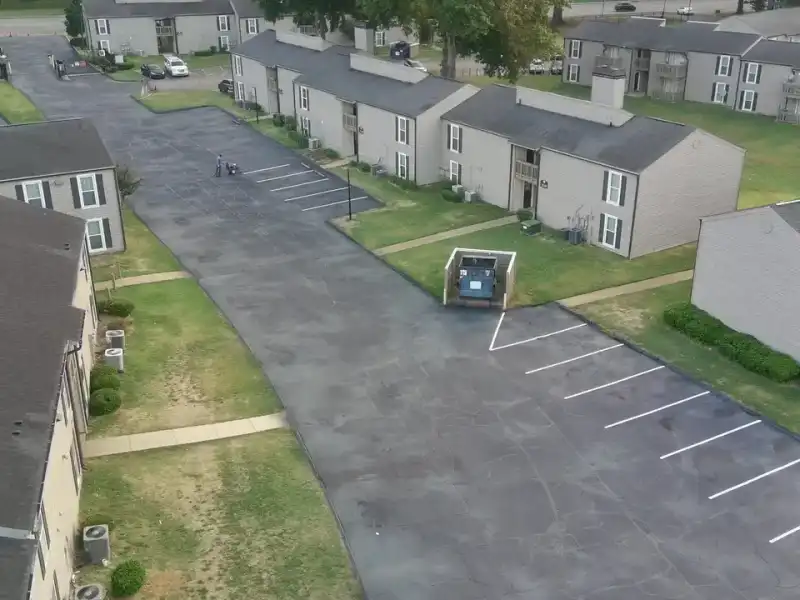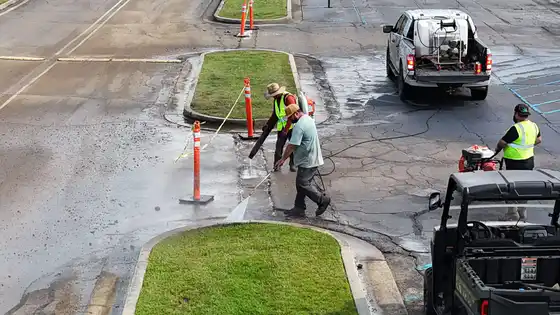
Clean
Dirt, debris, and loose material come off first, so the coating bonds to the asphalt.
How sealcoating works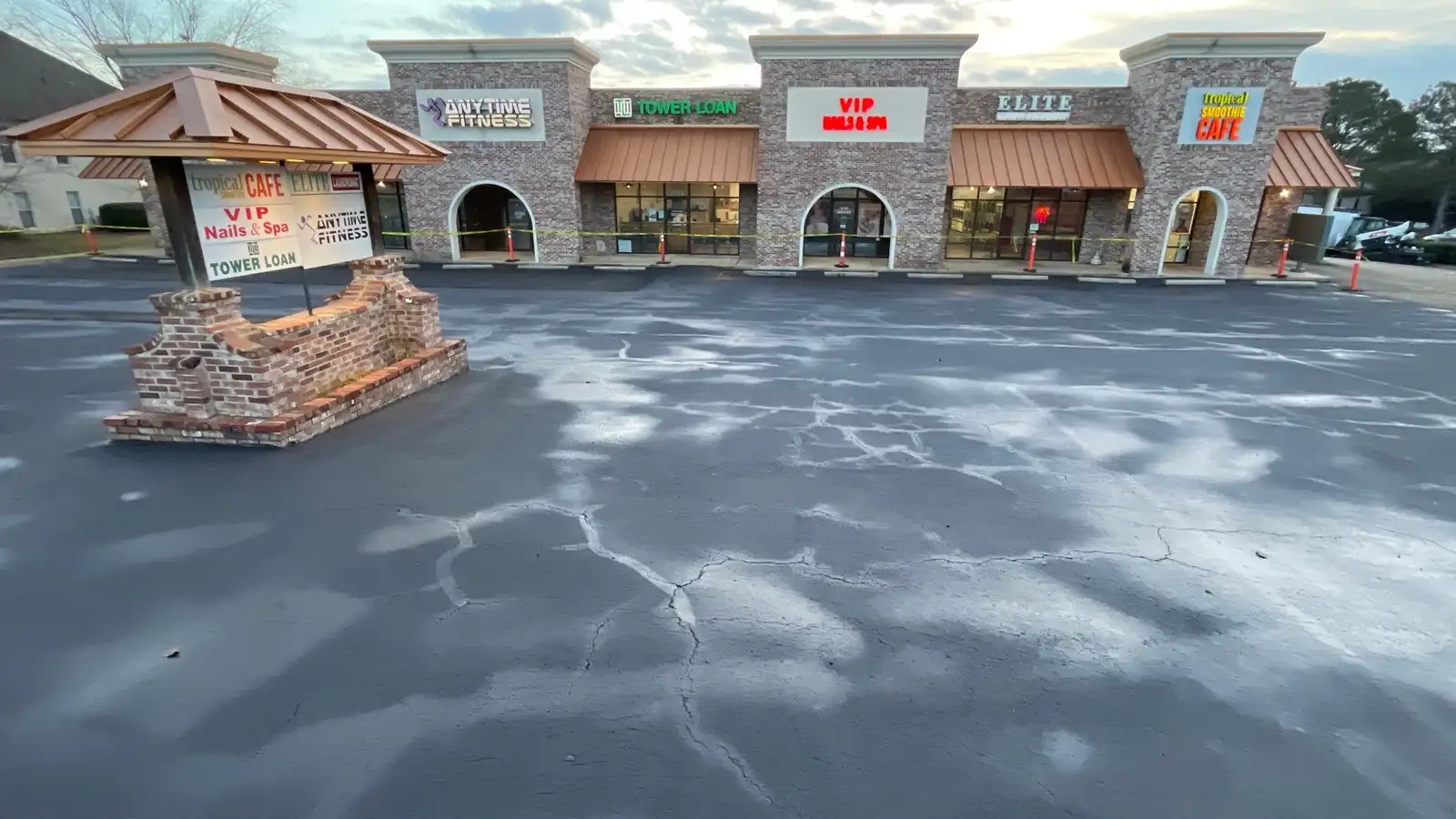
Free sealcoating quotes in Jackson, MS. No pressure, no runaround.
Protection from UV, water, and oil. Two coats, dry in 24 to 48 hours.
We sealcoat driveways and parking lots across Jackson out of our Jackson location. Most sealcoating jobs can be quoted from photos and a rough size, so nobody has to come out first.
Sealcoating extends pavement lifespan and heads off the cracks and potholes that lead to expensive repairs.
Fresh sealcoat brings back that deep black color and clean look, boosting curb appeal instantly.
The coating blocks UV rays that dry out and crack your asphalt over time.
Sealcoat keeps water from soaking into the asphalt and weakening the base underneath.
| typical thickness | 2 coats commercial-grade sealant |
|---|---|
| base material | Existing asphalt, cracks filled |
| cure time | 24 to 48 hours before traffic |
Sealcoat only protects pavement it can bond to, so most of the job happens before any coating goes down. The surface gets cleaned, the cracks get filled, and only then does the sealcoat go on, in two coats every time.
Sun is the steady enemy of Jackson asphalt. It dries out the surface until it turns gray and brittle and starts to crack. Two coats of sealcoat put a fresh layer between the sun and the asphalt, and bring back the dark finish.
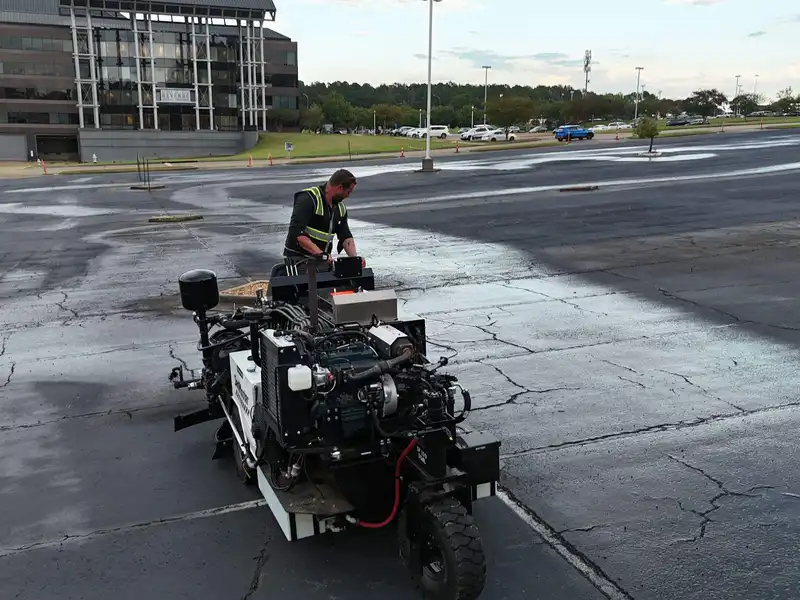
Dirt, debris, and loose material come off first, so the coating bonds to the asphalt.
How sealcoating works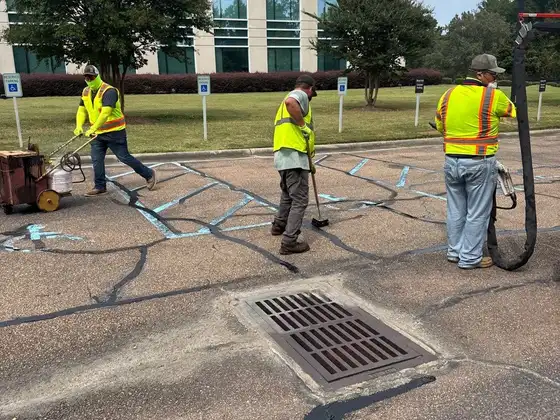
Cracks are filled with hot-applied filler before the coating, so water stops reaching the base.
Crack filling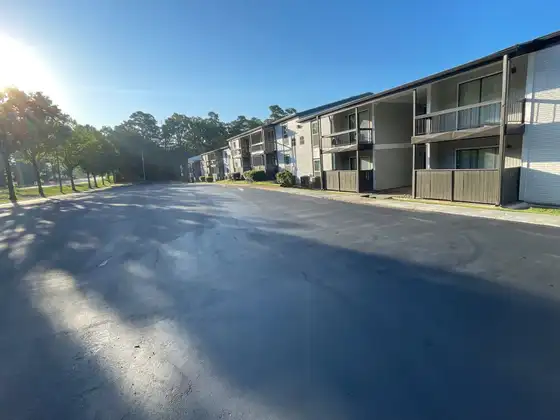
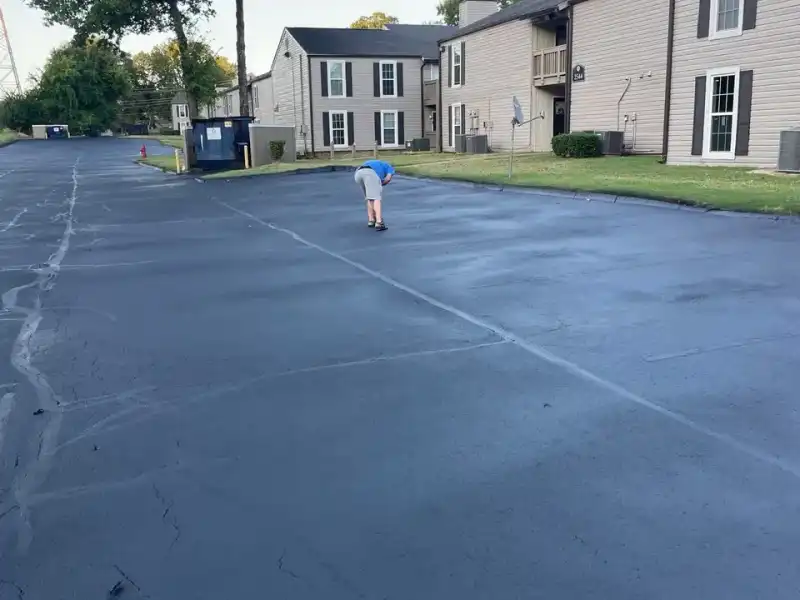
Two coats on every job, flood-coated with a squeegee machine on large lots. Keep traffic off for 24 to 48 hours while it dries.
Restriping after sealcoatSealcoat is protection, not repair. It won't fix potholes, and it won't hold a lot together where the base has failed. Coating over alligator cracking only hides the damage for a season.
If we see failed areas in your photos, we come out and look before we quote. Those areas get repaired first, and badly worn lots may be better off with a new layer of asphalt. Then the sealcoat goes on. New asphalt waits 6 to 12 months before its first coat, and after that it is every 1 to 2 years.
The coating is the same on a home driveway and a shopping center lot: cracks filled first, then two coats. What changes is how the job is staged and who has to stay off the pavement while it dries.
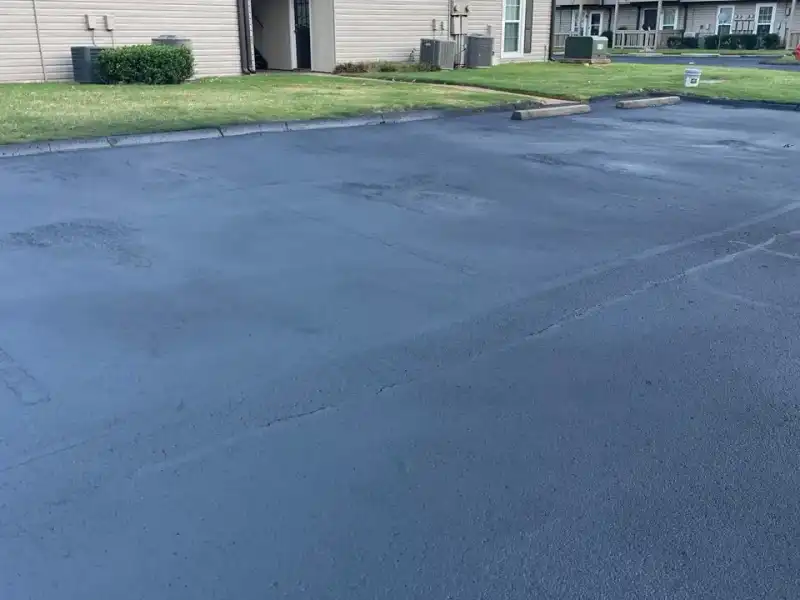
On a driveway, the cars come out, the surface gets cleaned, the cracks get filled, and both coats go down. Plan on 24 to 48 hours before you park on it again. Most driveways can be quoted from a few photos and a rough size. A driveway paved in the last 6 to 12 months isn't ready yet, and we will tell you when it is.
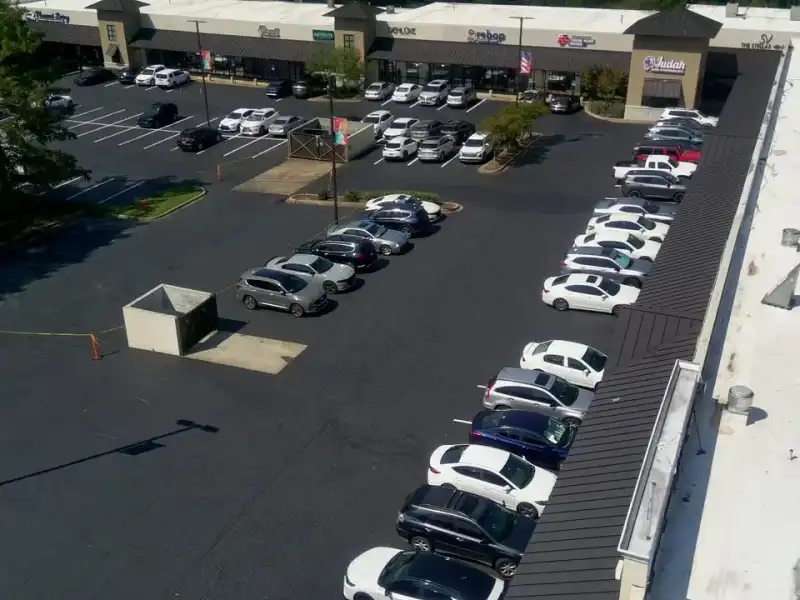
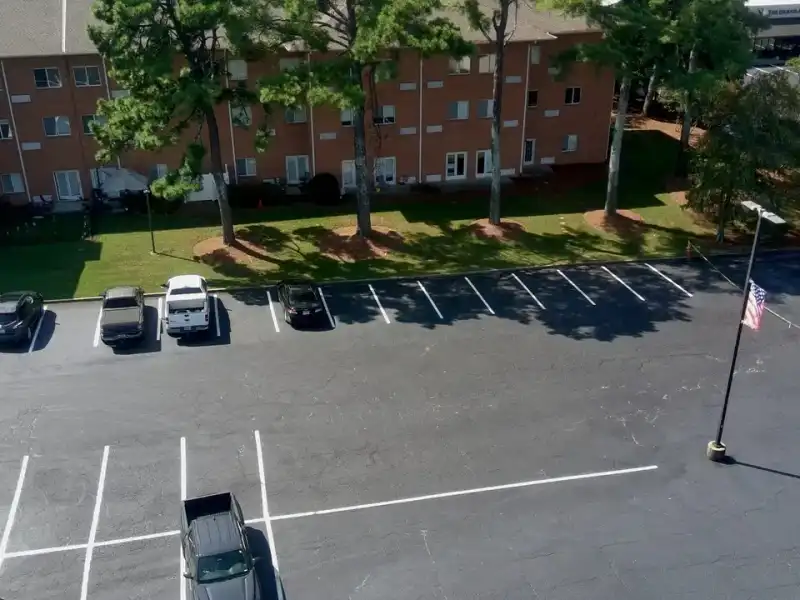
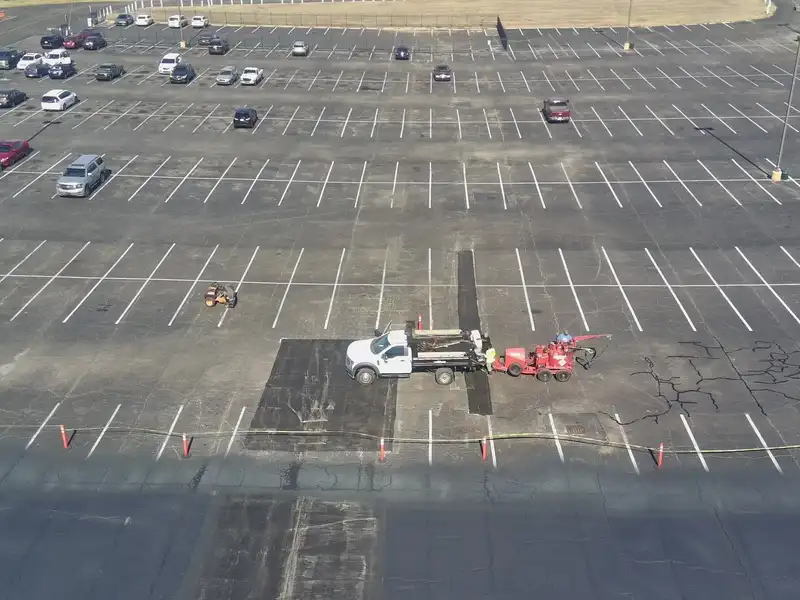
A parking lot has customers, tenants, or residents who still need to get in. We coat it in sections and set the order of those sections around your hours. Apartment communities usually want the dates ahead of time so notices can go out. Once each section dries, our own crews restripe it, so the lot comes back with clean lines.
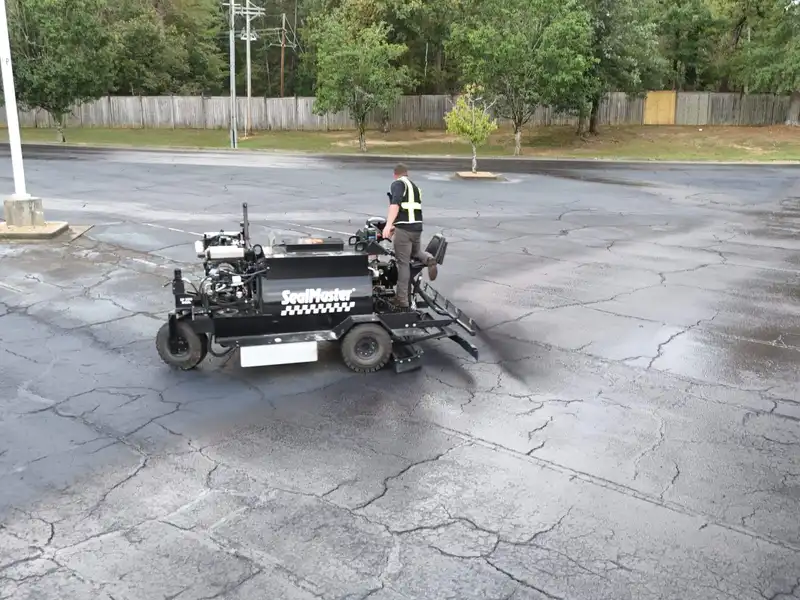
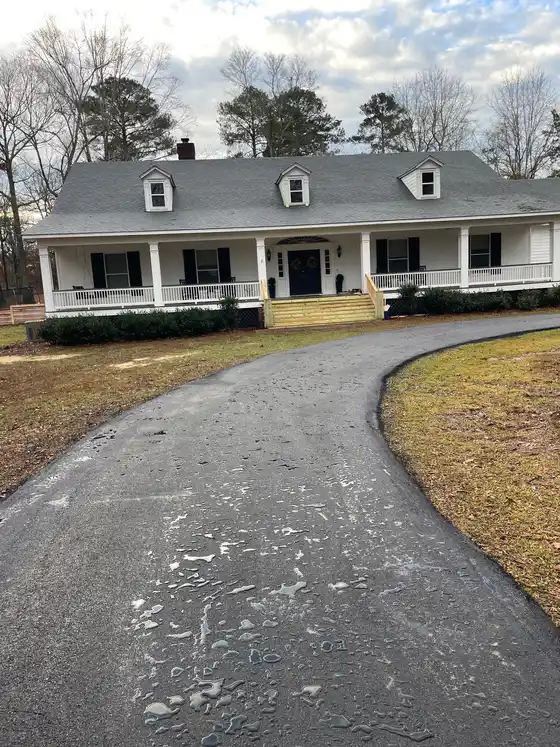
Cracks filled, two coats, and 24 to 48 hours before the cars go back on. New driveways wait 6 to 12 months for their first coat.
Driveway paving in Jackson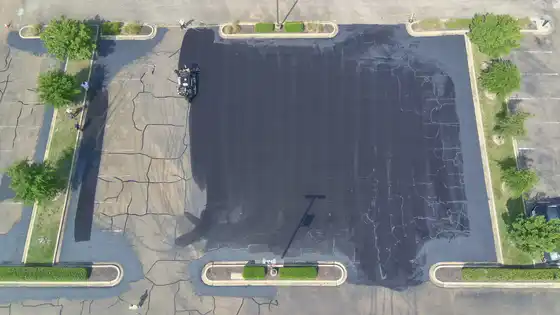
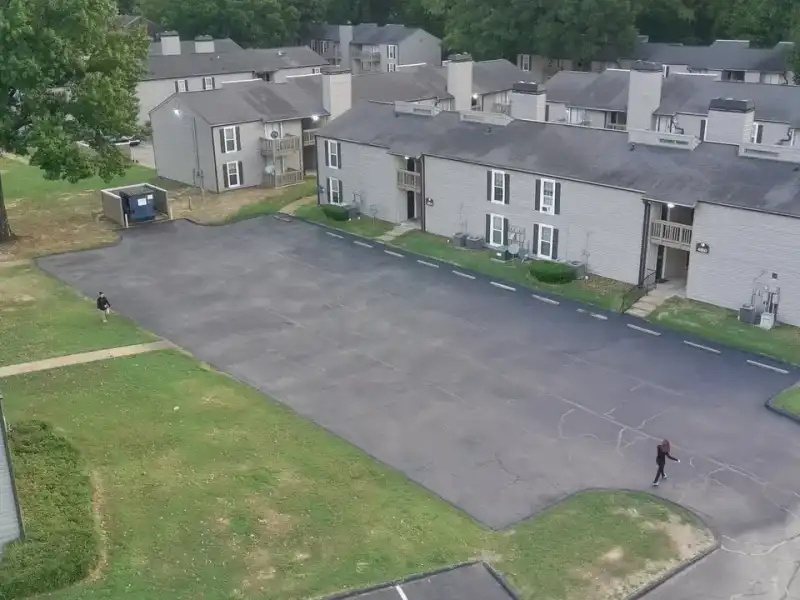
Coated one section at a time, so part of the lot stays open while the rest dries. We set the order around your busiest hours.
Parking lot paving in Jackson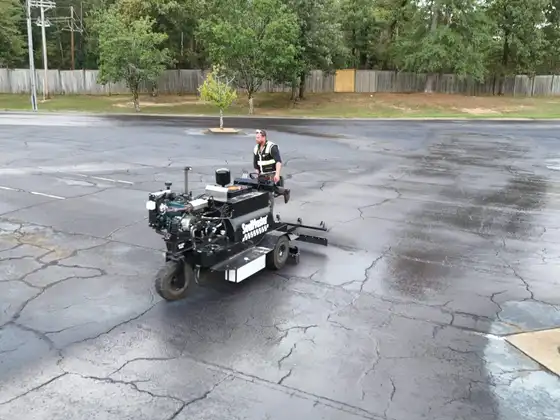
Residents need to know which rows close and when. We give you the section order and dates ahead of time so notices go out before the crew arrives.
Restriping in JacksonPavement shows when it needs a coat, and the signs turn up well before potholes do. Waiting for the potholes means the coating is no longer the fix.
The surface fades from black to gray. Fine cracks show up along the edges and across the drive lanes. Parking stalls, drive-thru lanes, and dumpster pads collect oil drips, and sealcoat is what keeps those drips off the asphalt itself. If it has been more than 1 to 2 years since the last coat, it is due on the calendar alone, whatever it looks like.
Catching it at that stage keeps the job small: clean, fill the cracks, two coats. Wait until the cracks widen and water reaches the base, and the work moves from sealcoat to repair. A few photos and a rough size are usually enough for us to tell you which side of that line you are on.
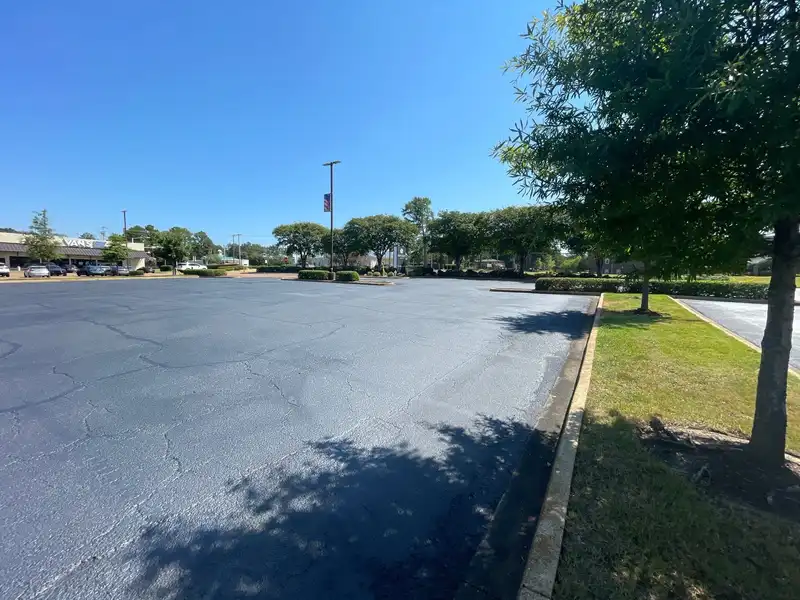
Black means the last coat is still working. Gray means the surface is drying out and the next coat should go on the schedule.
Hairline cracks get filled and sealed with the job. Wide cracks, potholes, or alligator cracking get repaired before any coating goes down.
Count back to the last sealcoat. Past 1 to 2 years, book the next one even if the surface still looks good.
Real job photos from PavePro crews. No stock photos.
On a driveway with a sound base, yes. It slows the drying and cracking that lead to bigger repairs and brings back the black finish. It won't fix a driveway that has already failed.
Keep cars off it for 24 to 48 hours while it dries.
Every 1 to 2 years, in two coats, with the cracks filled first. New asphalt waits 6 to 12 months before its first coat.
Yes. Sealcoat covers the old lines, so we restripe the lot once it dries. Our own crew does the striping and ADA markings.
Usually. Send photos and the rough size, and we send a free written quote. If the photos show damage that needs repair, we come look first.
Both. A driveway gets the same cleaning, crack filling, and two coats as a commercial lot.
Sun, water, and oil drips. It keeps the surface from drying out and turning brittle, which slows the cracking that lets water reach the base.
No. Sealcoating is a protective coating over sound asphalt. Resurfacing lays a new layer of asphalt over a worn surface, and it is the fix when the pavement is too far gone for a coating.
Sealcoating is protection, not repair. It will not fix larger cracks or potholes, but it does keep new ones from forming.
One coat leaves thin spots that wear through early. The second coat fills them in and evens out the protection across the whole surface.
In most cases, yes. We coat in sections so part of the lot stays open while the rest dries, then switch.
Tell us about the job and we'll send a written, itemized quote. No pressure, no runaround.