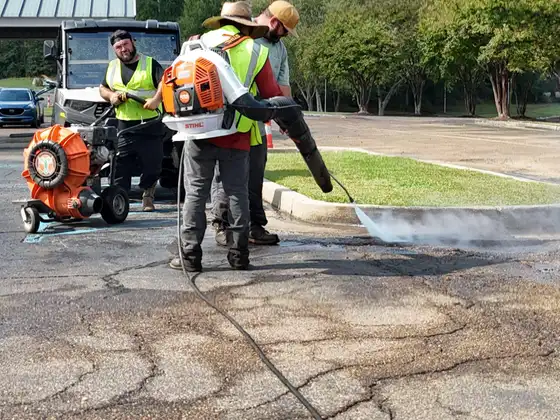
Blown out
Dirt and loose debris come out of each crack before it is filled, so the hot filler goes into the crack itself and not on top of what is sitting in it.
Sealcoating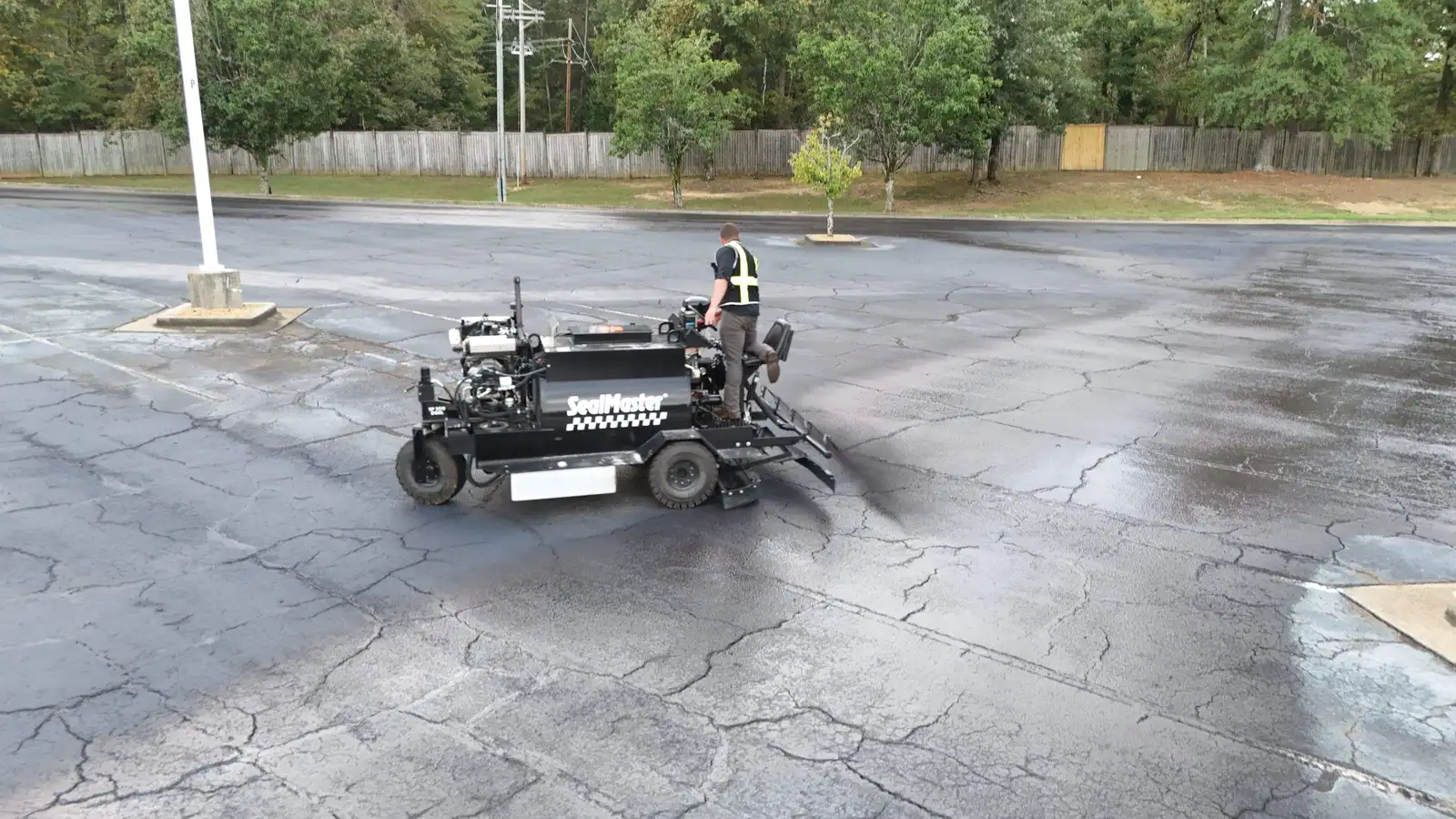
Free sealcoating quotes in Richland, MS. No pressure, no runaround.
Protection from UV, water, and oil. Two coats, dry in 24 to 48 hours.
We sealcoat commercial lots and home driveways in Richland and across Rankin County, including Eastside and Westside, with crews coming from our Madison and Jackson locations.
Sealcoating extends pavement lifespan and heads off the cracks and potholes that lead to expensive repairs.
Fresh sealcoat brings back that deep black color and clean look, boosting curb appeal instantly.
The coating blocks UV rays that dry out and crack your asphalt over time.
Sealcoat keeps water from soaking into the asphalt and weakening the base underneath.
| typical thickness | 2 coats commercial-grade sealant |
|---|---|
| base material | Existing asphalt, cracks filled |
| cure time | 24 to 48 hours before traffic |
Sealcoat protects asphalt that is still in good shape. It goes over a sound surface to keep water and wear out, and it has to go on a clean one. So the job starts with cleaning: the crew blows debris off the lot and out of the cracks. Oil spots and loose material get cleaned up at the same time.
Next comes crack filling. Cracks are filled with hot-applied crack filler before any sealcoat goes down, so water can't get under the new coat. Then two coats of sealcoat go on. On large lots, the sealcoat is flood-coated with a squeegee machine, one section at a time.
Sealcoat dries in 24 to 48 hours. It covers the old lines, so the lot gets restriped once it is dry, by our own crew, with the stalls, ADA spaces, fire lanes, and arrows laid back out. Plan on two coats every 1 to 2 years to keep the lot sealed.
Dirt and loose debris come out of each crack before it is filled, so the hot filler goes into the crack itself and not on top of what is sitting in it.
Sealcoating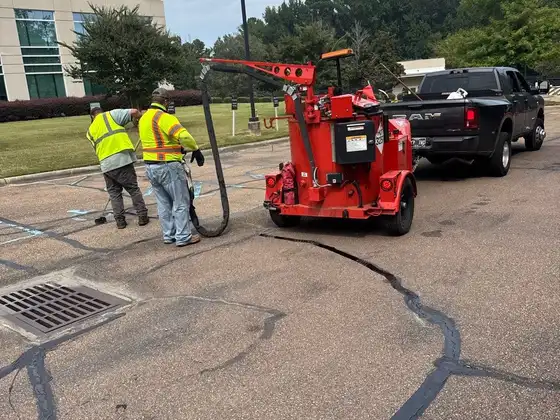
The melter keeps crack filler hot while the crew works the lot. Every crack gets filled before the first coat of sealcoat goes down.
Crack filling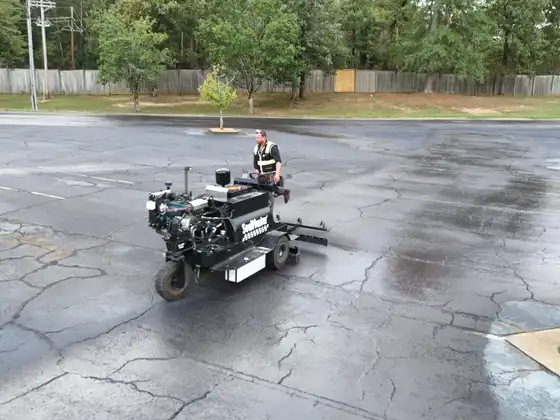
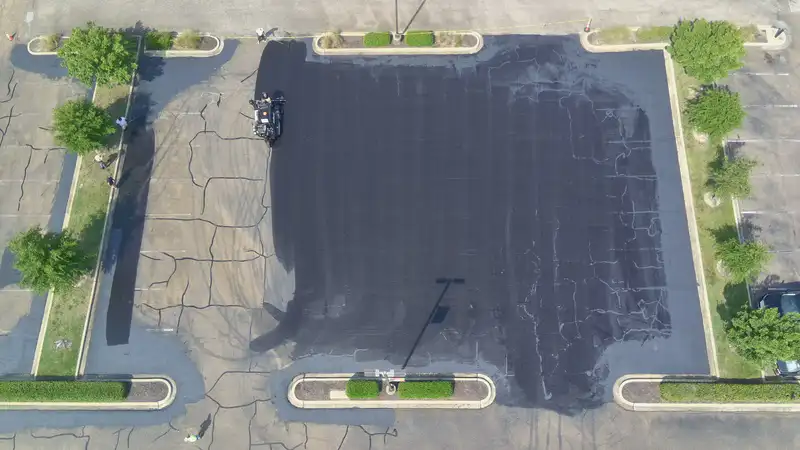
Two coats go on across the whole lot. Once the sealcoat has dried, our own crew lays the stalls and markings back out.
Striping in RichlandSealcoat cannot fix a failed base, and that matters most where trucks run. A dock approach with ruts, a turning area with alligator cracking, or a lane where the asphalt has started to break up needs repair before it gets sealed. Coating over it hides the damage for a while, and then it comes back through.
When we look at a lot for sealcoating, we mark those areas separately. Failed spots are cut out and patched, or rebuilt if the damage runs deep, and the quote lists the repair as its own line item. If a lane has failed from end to end, we may recommend repaving that section and paving the lot by zone instead.
Once the repairs are in and the cracks are filled, the whole lot can be sealed together. Truck areas and car areas get the same two coats, so the surface looks even when it is restriped.
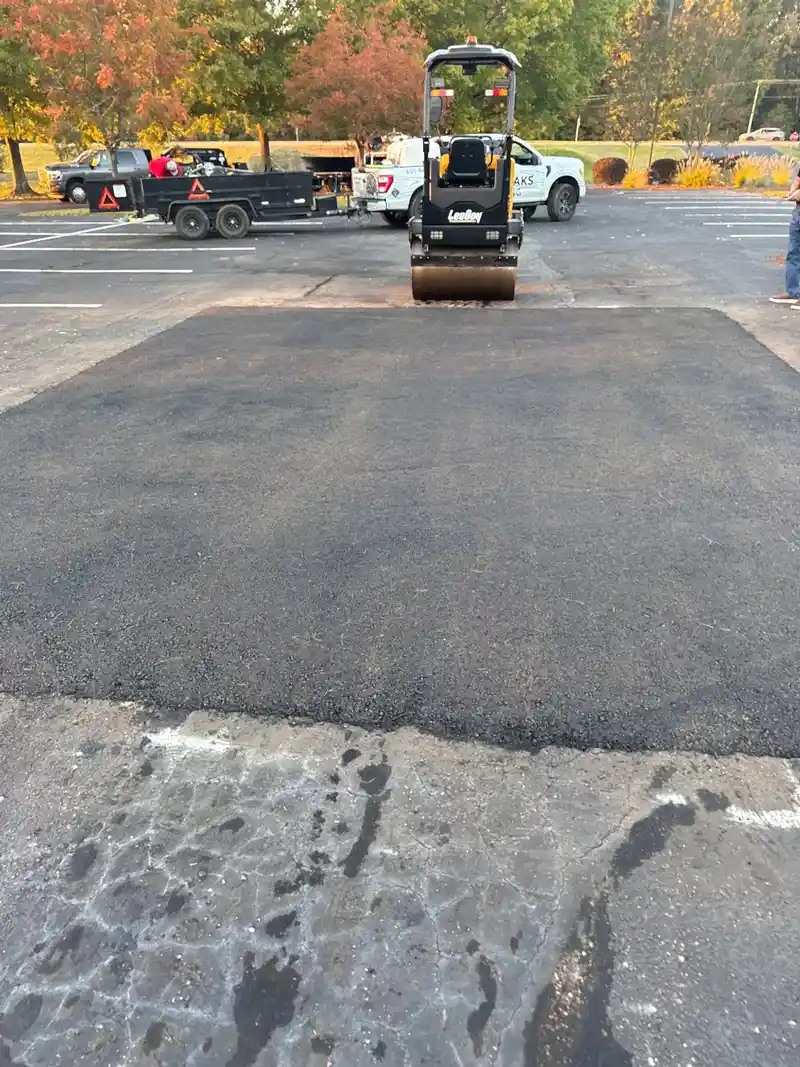
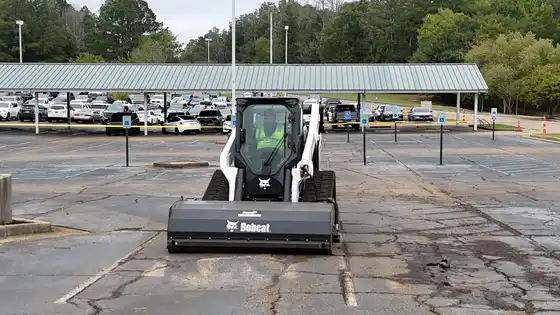
A skid steer clears and preps the worn sections before repairs, so the patches sit on solid ground instead of loose material.
Parking lot repair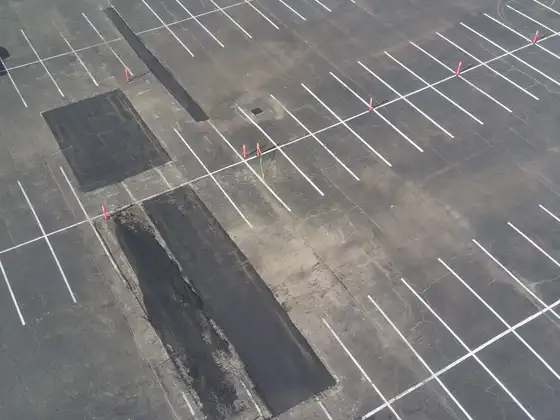
Fresh patches go in where the base failed. Sealing comes after, so the coat lands on pavement that can hold up under it.
Parking lots in Richland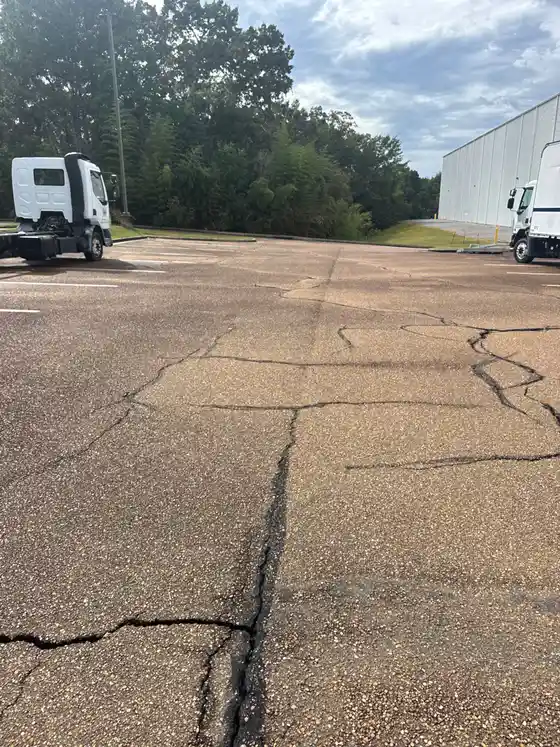
Cracks in the areas where trucks park get filled like the rest of the lot, keeping water out from under the heaviest wheels.
Heavy-duty pavingSealcoating and striping can usually be quoted from photos. Send pictures of the lot or driveway and the rough size, and we send back a free written quote, often the same day. If the photos show damage that needs repair, we come out and look first.
On a business lot, we coat in sections so part of the lot stays open while the rest dries, and we plan the order around your hours and your truck schedule. Each section stays closed until it is dry enough to drive on, and we tell you when that is. Most jobs are scheduled within 2 to 3 weeks of the deposit.
Homeowners in Richland get the same process on a driveway: clean it, fill the cracks, two coats. A new driveway should wait 6 to 12 months before its first coat so the asphalt can cure, then get sealed every 1 to 2 years after that. Driveway sealcoating can usually be quoted from photos too.
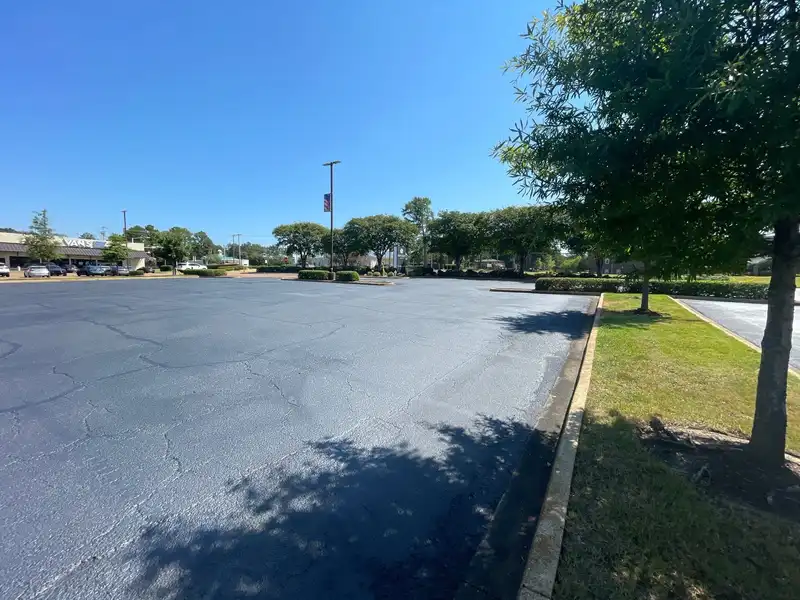
Pictures and a rough size of the lot or driveway are usually enough for a written sealcoating quote.
Cracks are cleaned and filled with hot-applied filler, then two coats go on in sections.
Once the sealcoat dries, our own crew lays the lines, ADA spaces, and arrows back out.
Real job photos from PavePro crews. No stock photos.
 Sealcoating
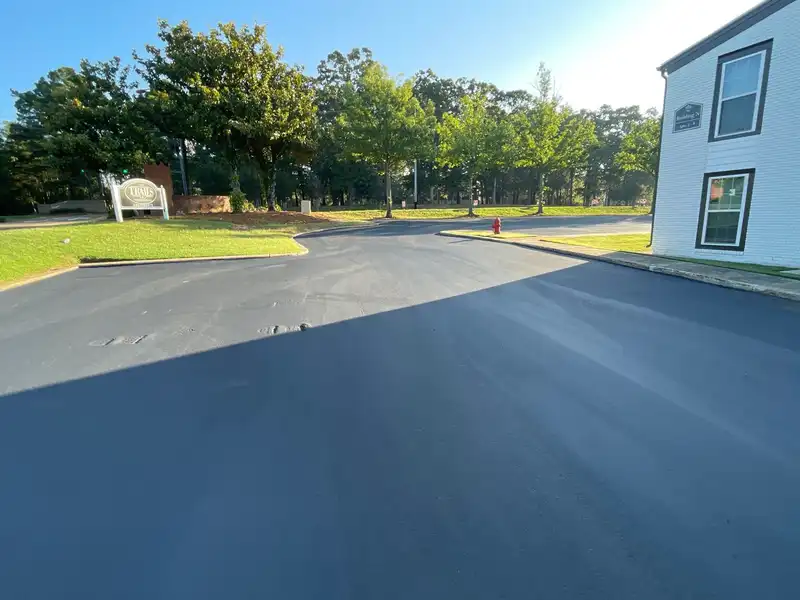
Freshly sealcoated apartment drive in morning light
 Sealcoating
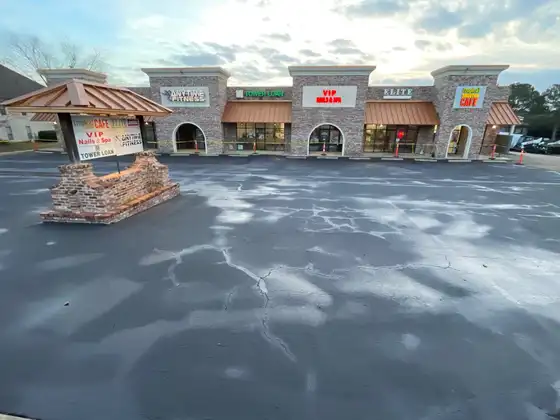
Fresh wet sealcoat in front of a shopping center
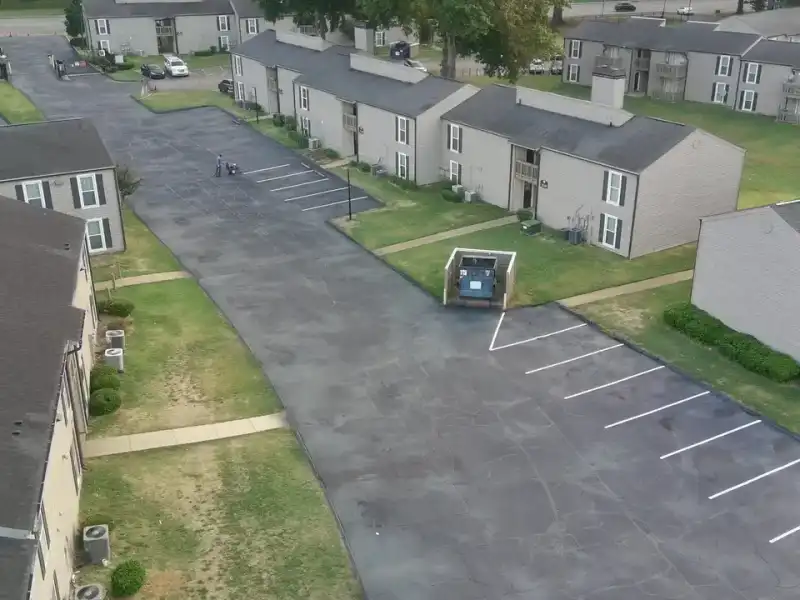 Sealcoating
Sealcoated apartment parking lot
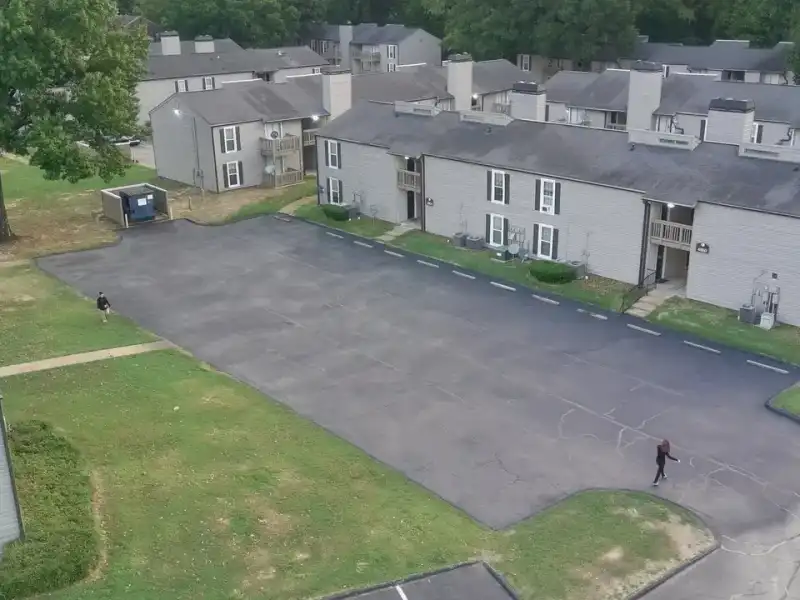 Sealcoating
Sealcoated apartment drive and parking
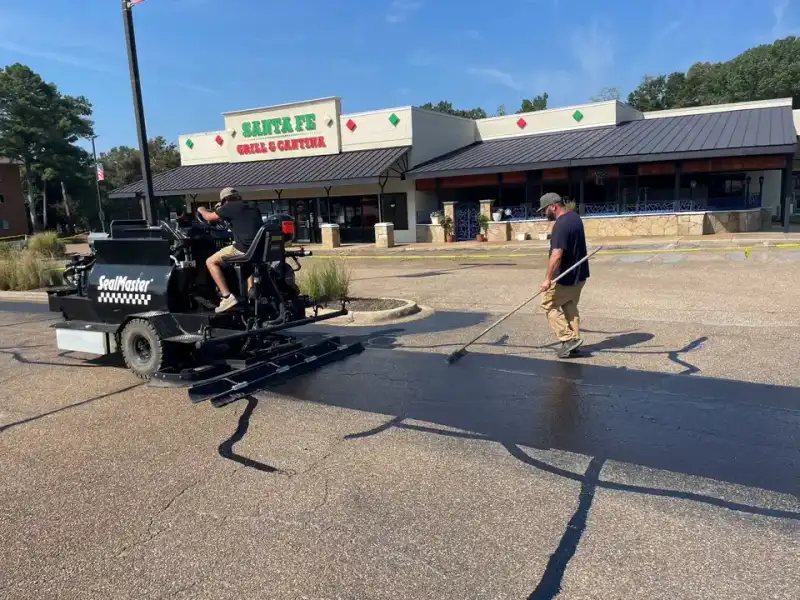 Sealcoating
Sealcoat rig working a shopping center lot
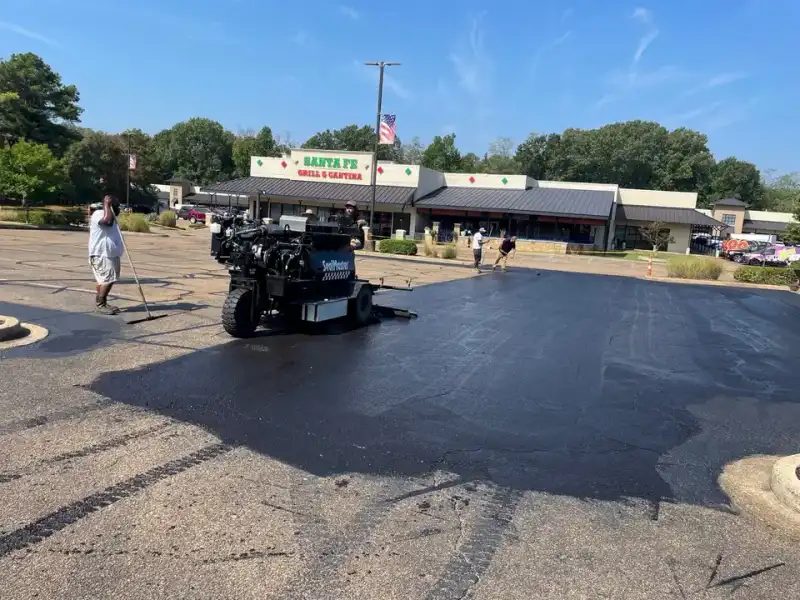 Sealcoating
 a shopping center parking lot
Yes, as long as the base under it is sound. Ruts and alligator cracking get repaired first, because sealcoat can't fix a failed base.
Yes. Every crack is cleaned and filled with hot-applied crack filler before the first coat goes on.
Yes. Sealcoat covers the old lines, so our own crew restripes the stalls, ADA spaces, fire lanes, and arrows once it is dry. If you want a new layout, we can change it then.
We coat in sections and plan the order around your hours, so trucks and customers keep a way in while each part dries.
After 6 to 12 months, once the asphalt has had time to cure. After that, sealcoat every 1 to 2 years.
Yes. A driveway gets the same cleaning, crack filling, and two coats as a commercial lot.
Large lots are flood-coated with a squeegee machine, one section at a time, after the cracks are filled.
Sealcoat typically dries in 24 to 48 hours. We tell you exactly when it is safe to walk or drive on.
Usually, yes. Send photos and the rough size of the area, and we will put together a free written quote. If we see damage that needs repair, we will come look first.
One coat leaves thin spots that wear through early. The second coat fills them in and evens out the protection across the whole surface.
Tell us about the job and we'll send a written, itemized quote. No pressure, no runaround.