Planning a parking lot layout that moves traffic
A parking lot is a traffic plan before it is pavement. Before we price anything, we look at where cars come in off the street, where delivery trucks need to go, where people walk from their car to the door, and where cars stack up at your busiest hour.
A lot of the daily headaches on a parking lot are layout problems: an entrance that backs up into the road, a drive lane too tight for a box truck, a dumpster pad the garbage truck has to reverse across the whole lot to reach. Those get fixed on paper, before the first load of asphalt shows up.
On a new lot we work out the entrances, drive lanes, parking rows, and pedestrian paths together. On an existing lot we look at whether the current layout is worth keeping or whether repaving is the time to change it. Once the asphalt and the lines are down, changing the flow costs a lot more.
Drainage: where the water goes decides how long the lot lasts
Water is what kills a parking lot. When rain sits on the surface it works into cracks, softens the base, and turns a small low spot into a pothole. Here, the clay under a lot swells when it is wet and shrinks when it dries, so a lot that holds water moves more than one that sheds it.
We grade every lot so water runs off the pavement and toward drains, ditches, or the street, and away from your building and entrances. If the lot already has drains, we pave to them. If puddles sit in the same spots after every storm, we find out why before we pave over them.
Drainage also drives the base work underneath. We check grade, soil, and existing pavement on site, and the compacted base is sized to the traffic the lot will carry. A lot that drains right and sits on a solid base is the one that reaches the 20 to 30 years asphalt can give with regular maintenance.
ADA spaces, striping, and the handoff from paving to paint
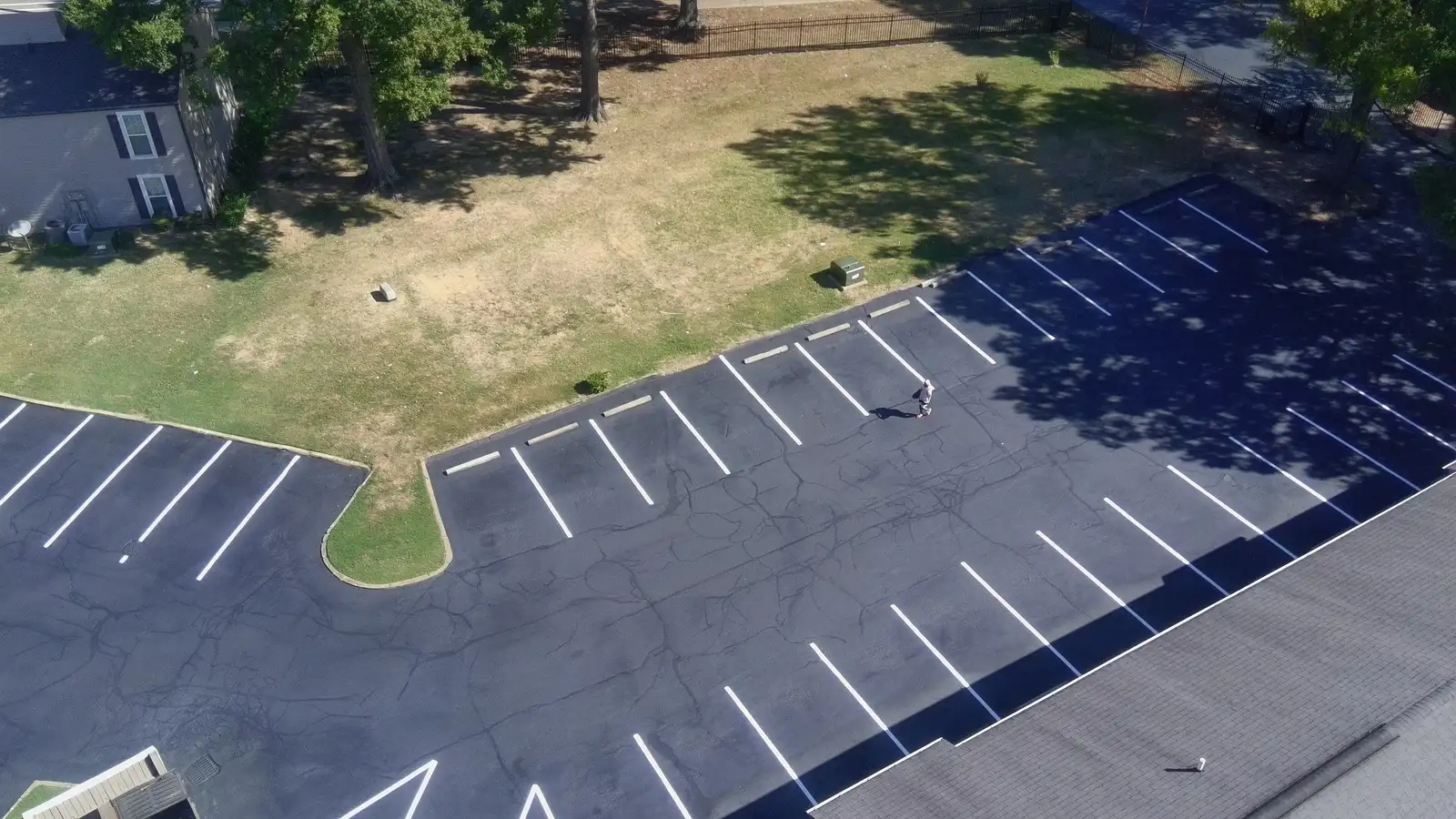
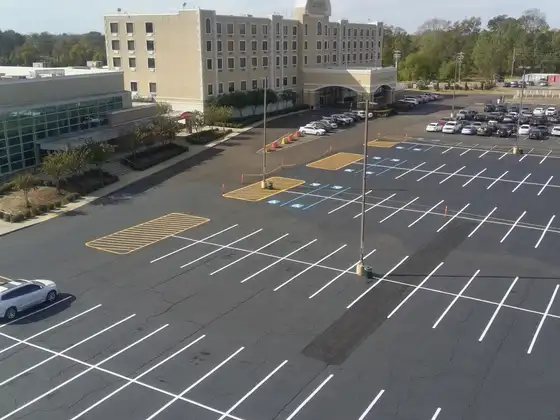
A new lot is not finished until it is striped. Many paving companies hand striping off to a separate company, and the owner ends up coordinating two schedules. With us, the same company paves and stripes. Our own employees handle the parking lot striping: stall lines, ADA spaces and access aisles, fire lanes, arrows, crosswalks, and any custom markings.
ADA spaces need a level surface and a direct route to an accessible entrance, so they get planned into the grading from the start. Fixing them with paint after the fact does not work when the spot you picked sits on a slope.
We use commercial fast-dry latex striping paint, which dries in about 30 minutes. For some projects we can stripe at night or on a weekend so the lot is ready when you open.
Paving in phases so your business stays open
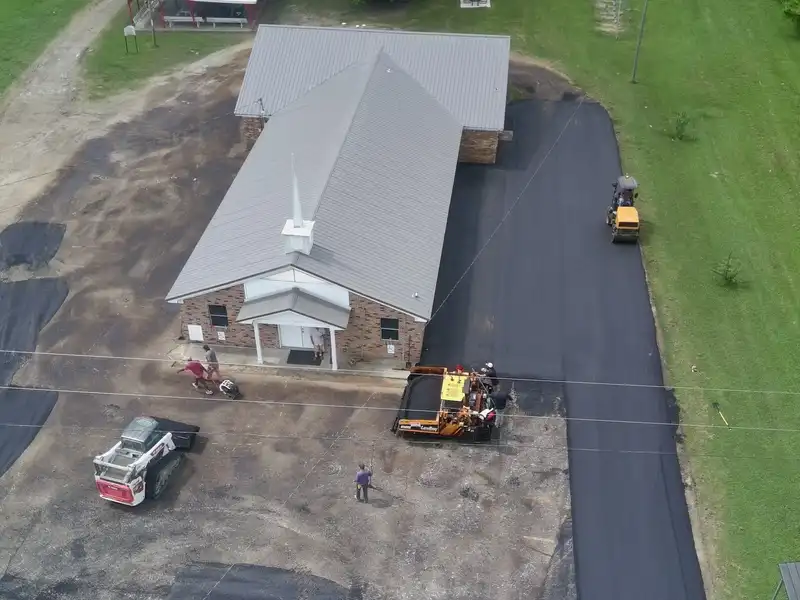
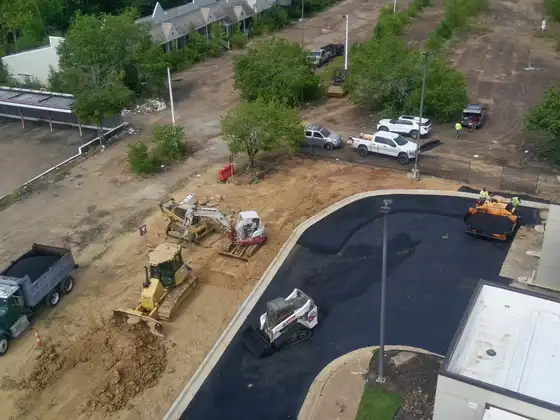
Most businesses cannot close the whole lot for a repave. Customers still need to park, employees still need to get in, and deliveries still show up. So we plan the work in sections.
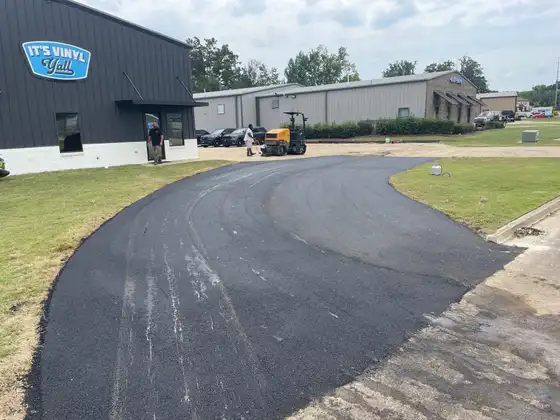
A typical phased job closes one part of the lot at a time while the rest stays open, with traffic routed around the work area. We talk through your hours, your busiest days, and which entrance matters most, then sequence the work around that. Light vehicles can usually drive on new asphalt in about 24 hours, so a finished section opens back up fast and the next one closes.
Heavy trucks need 48 to 72 hours before they roll on new asphalt. If you take freight deliveries, tell us, and we schedule the delivery lanes so trucks have a path the whole time.
Parking lots for churches, schools, and HOAs
Churches, schools, and HOAs have a different problem than a store: the lot is quiet most of the week and packed at set times. That makes scheduling easier and mistakes more visible.
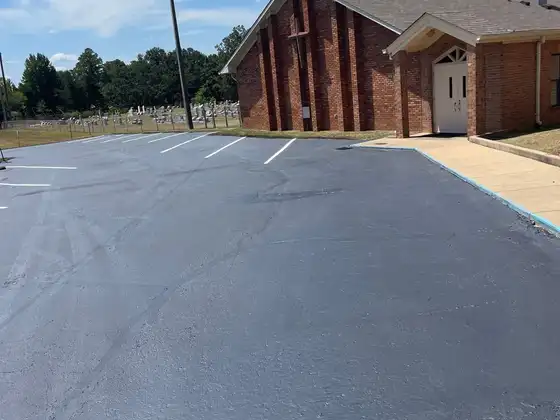
For a church, we plan the work so the lot is open and striped before the weekend. For a school, the best window is usually a break, and drop-off and pickup lanes get the most attention in the layout because that is where the traffic jams and the safety problems happen. For an HOA, we work with the board on a schedule residents can plan around.
In every case, the same things matter: a layout that handles the peak crowd, ADA spaces near the accessible entrance, clear fire lanes, and a lot that drains. If your lot also needs speed bumps or curbs to slow drivers down near walkways, we plan them into the same project.
What goes into a parking lot paving quote
We do not give a price on the spot for a parking lot. Someone comes out to check the grade, the soil, and the existing pavement, then we put the quote together from the office, often the same day. The quote is free, written, itemized, and has no hidden fees and no obligation.
The things that move the number:
- Square footage and the shape of the lot
- What is there now: bare ground, gravel, or old asphalt that has to come out or can be resurfaced
- How much base repair and grading the site needs
- The traffic the lot carries, from cars to loaded trucks
- Drainage work
- Striping, ADA markings, and any phasing to keep you open
If your existing lot is mostly sound, a full repave may not be the right call. We will tell you if parking lot repair or an overlay gets you more for the money.
Taking care of a new parking lot
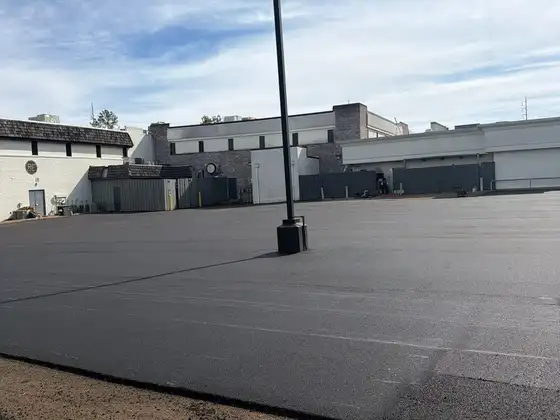
New asphalt keeps curing for 6 to 12 months. During that time it is softer than it will be later, so sharp turns from heavy trucks and parked trailers on jack stands can leave marks. Keep those to a minimum the first few months where you can.
The first sealcoat goes on 6 to 12 months after paving, once the asphalt has cured. After that, sealcoating every 1 to 2 years and filling cracks while they are small is what keeps a lot in service for the long haul. Restriping usually lines up with sealcoating, since fresh sealer covers the old lines.
We stand behind our work, and we will set you up with a maintenance schedule that fits how hard your lot gets used.