How a private road differs from a driveway
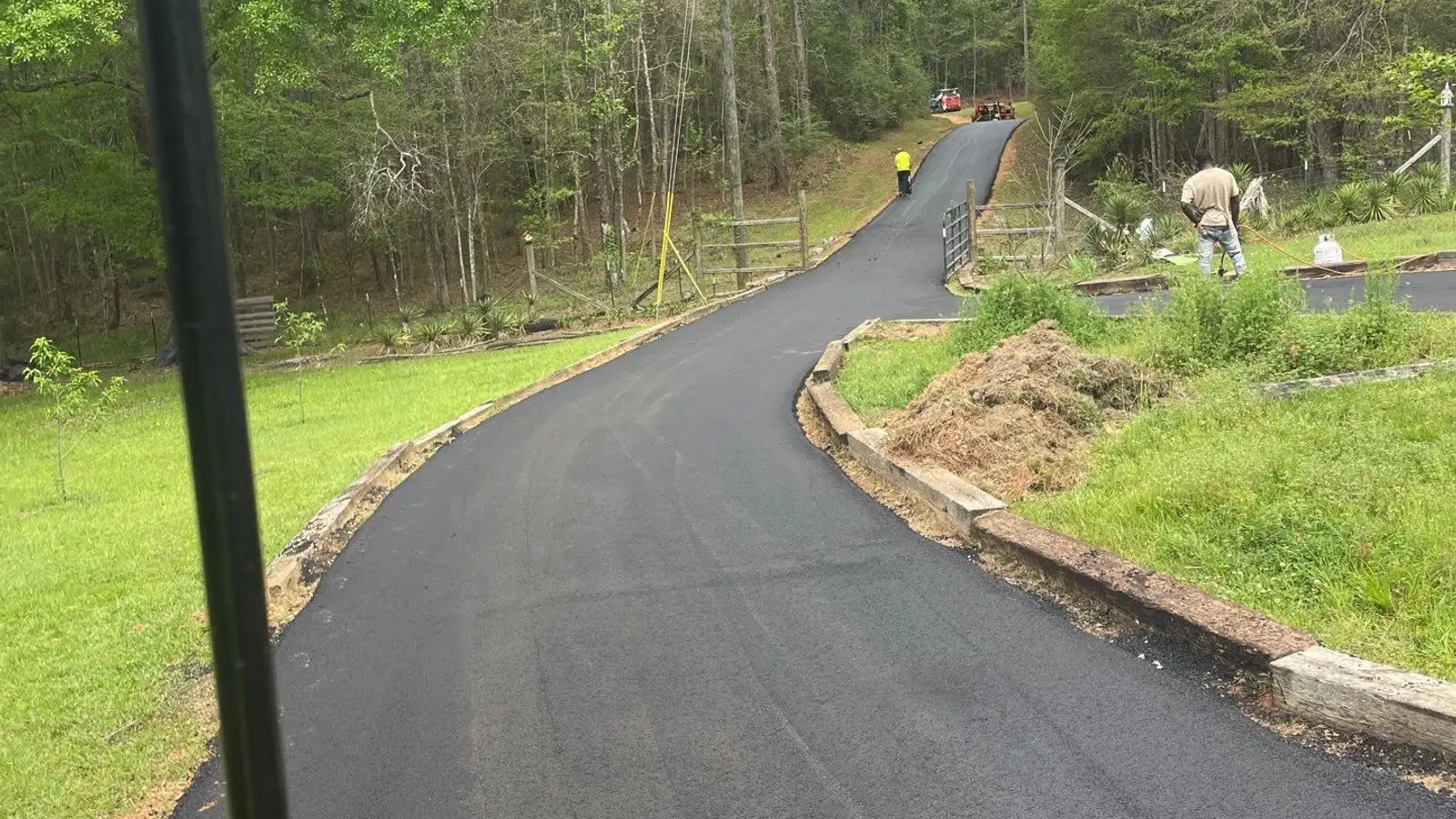
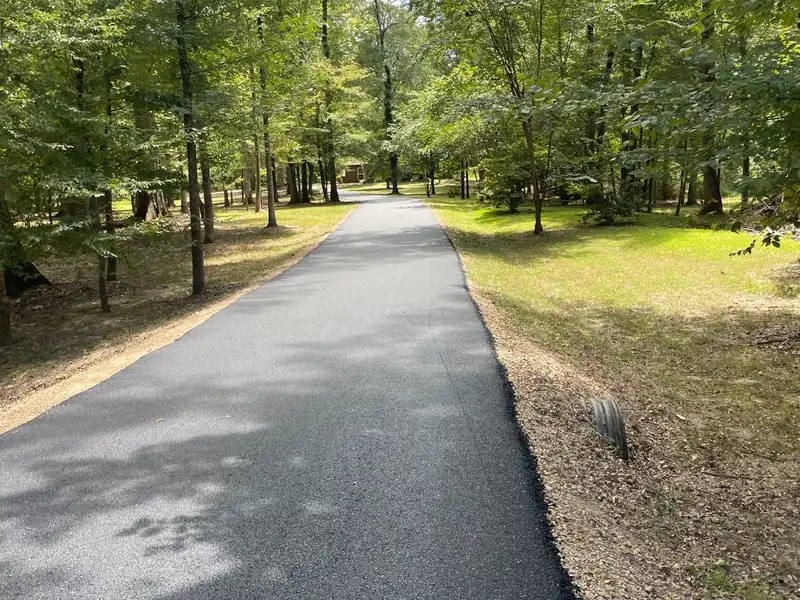
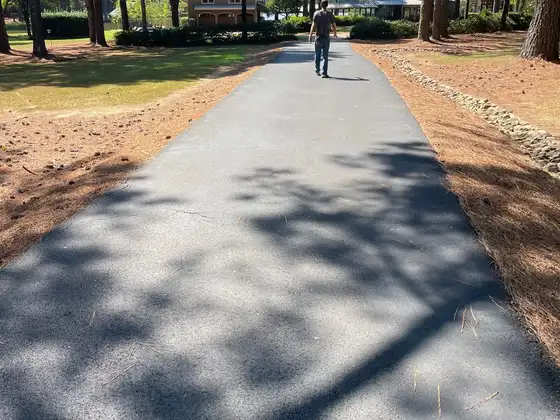
A driveway serves one house and mostly cars. A private road or lane is longer, often serves several households, and carries whatever those households drive: pickups pulling trailers, delivery trucks, a propane truck, the occasional tractor. Nobody from the county maintains it, so every pothole is the owners' problem.
That changes how we build it. Over a long run, drainage matters more than anything else, because water has more places to get into the road. The base and asphalt are sized to the heaviest vehicle that will use it regularly, and the road needs room for two vehicles to pass or for a trailer to turn around. If you are paving the stretch from the road to one house, our asphalt driveway paving page covers that job.
Drainage first: crown, ditches, and culverts
Most private roads that fail early fail from water. A flat road holds water on the surface, it finds the cracks, and it softens the base underneath. In much of central Mississippi the ground is clay that swells when wet and shrinks when it dries, so a base that stays wet moves, and the asphalt on top cracks with it.
We build the road with a crown so rain runs off both sides into ditches, and we shape those ditches so they carry water away instead of holding it beside the road. Where water has to cross, such as a low spot, a creek draw, or a driveway branching off, a culvert goes in under the road.
During the walk-through we look at where water comes from, where it stands now, and where it can go. Fixing drainage before paving costs less than paving twice.
Paving a gravel lane or dirt road
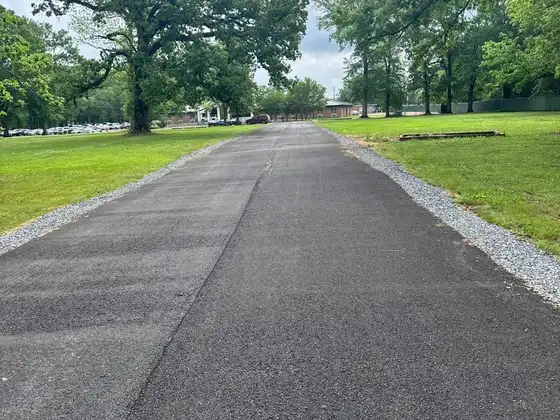
Many private roads start as gravel. Converting one to asphalt ends the cycle of regrading, adding rock, and fighting ruts and dust.
The question is what is under the gravel. On some lanes, years of rock have built a firm bed that can be graded and compacted into the new base. On others, the rock has pushed down into soft soil and the road pumps mud after a rain. Those sections have to be dug out and rebuilt before any asphalt goes down. We check this on the walk-through and show you where the problem areas are.
For parking areas, yards, and driveways coming off gravel, see gravel to asphalt conversion.
Shared drives, HOA roads, and getting everyone on board
When a road has more than one owner, the hard part is often getting everyone to agree. A few things make it go smoother:
- Get every decision-maker to the walk-through, or at least one person each household or the HOA board trusts to speak for them.
- Use one written, itemized quote so everyone sees the same scope and the same numbers.
- Settle how the cost is split, and who maintains the road afterward, before work is scheduled.
- Plan for access. A single-lane road with houses at the end cannot be driven while it is paved and for about a day after, so residents need to know when to park at the road and walk in.
If your HOA owns a network of streets with curbs and drains, our road, street, and municipal paving page is the better fit.
What drives the cost of private road paving
Every private road gets its own quote, because two lanes the same length can be very different jobs. The biggest factors:
- Length and width of the paved surface, including any turnarounds or passing spots.
- Drainage work: ditch shaping, new culverts, or replacing crushed ones.
- What is there now. Sound gravel needs less work than a dirt road or a lane full of soft spots.
- The heaviest regular traffic, which sets how heavy the base and asphalt need to be.
- Grade. Steep sections and sharp curves take more care to pave and compact.
- The tie-in where the lane meets a county road or city street.
We come out, look at all of it, and send a free written quote with no hidden fees.
Keeping a private road in good shape
A paved private road needs a little attention every year. Clear the ditches and culvert ends of leaves and silt so water keeps moving. Watch the edges, especially where trucks pull off to let someone pass, since unsupported edges break first.
Fill cracks while they are small, before water reaches the base; our crack filling service handles that. Once the asphalt has cured for 6 to 12 months, sealcoating every 1 to 2 years protects the surface from sun and water. With that kind of care, asphalt commonly lasts 20 to 30 years.