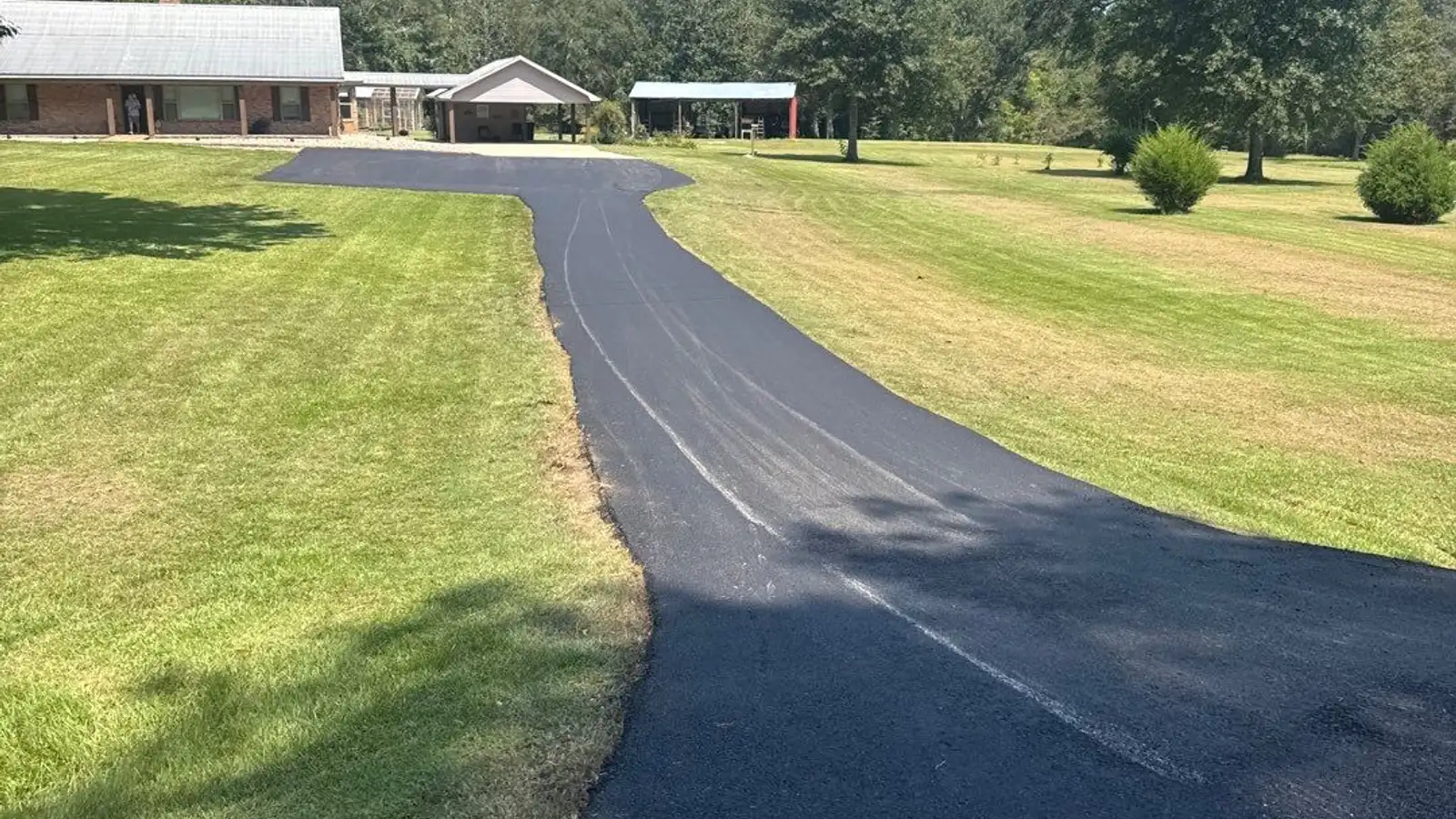
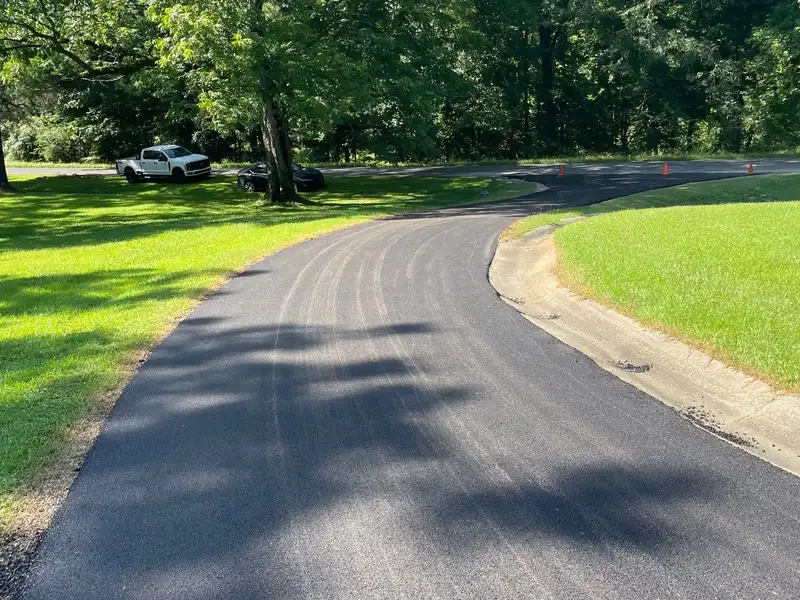
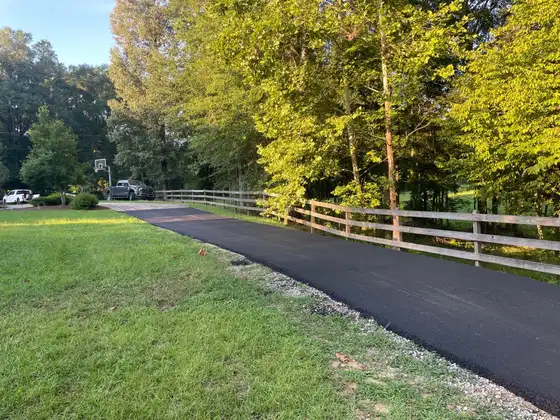
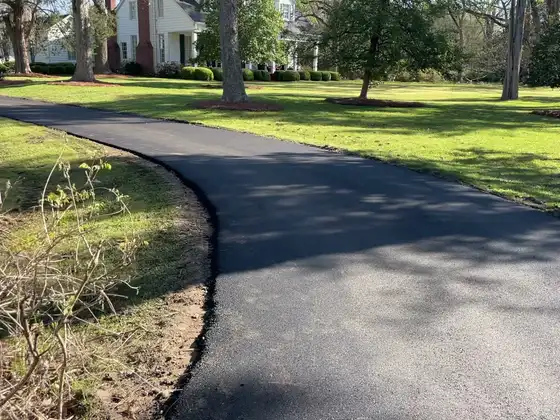
Planning a new asphalt driveway
Start with how you use the driveway. Two cars side by side, a boat or camper trailer, a work truck, or a spot for guests all change the width and layout. A turnaround or parking pad can save you from backing into the street every morning.
Then think about water. A driveway is a large hard surface, and every drop that lands on it runs somewhere. We lay out the grade so it drains away from the house and garage and toward the yard, the ditch, or a drain.
Last is the connection to the street. Some cities and counties have rules for the apron where a driveway meets a public road, and many HOAs have their own standards. Check both before the job is scheduled so nothing has to be changed after the asphalt is down.
Why the base matters more than the asphalt
The asphalt you see is the last layer. What holds it up is the ground and the base underneath, and that is where most driveway failures start.
We grade the site, find soft spots, and dig out ground that won't hold. Mississippi clay swells when it is wet and shrinks when it dries, so weak spots that get paved over tend to show up later as cracks and sunken areas. Once the subgrade is solid, we place and compact a crushed limestone base.
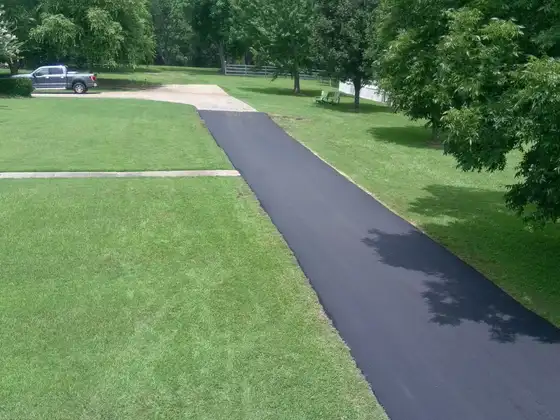
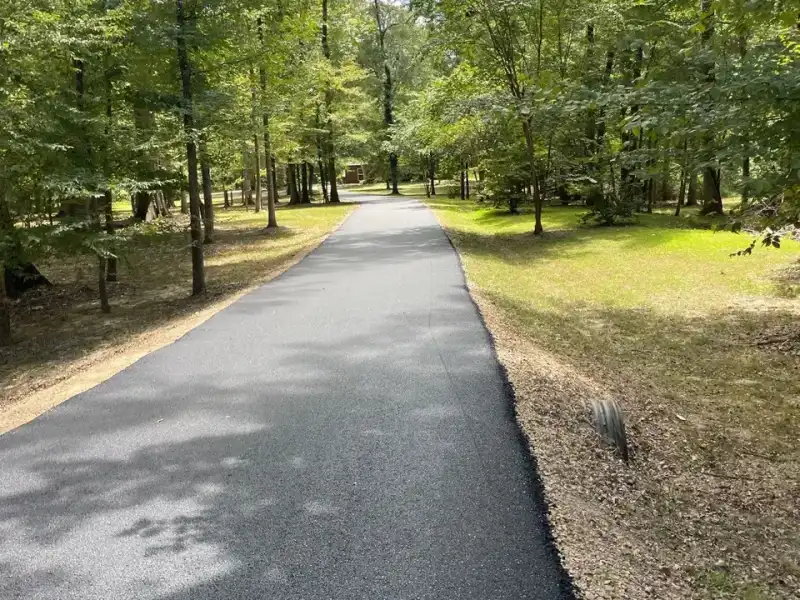
On top of that goes hot asphalt at 3 inches laid, 2.5 inches compacted, rolled tight with clean edges and transitions at the garage and street.
New driveway, resurfacing, or repair: which do you need?
A new driveway is a full build: grading, base, and fresh asphalt, either on bare ground or after the old driveway is torn out. It is the right call when there is no driveway yet, or when the existing one has failed down to the base.
If your asphalt is worn and cracked on top but the base is still solid, resurfacing puts a new layer over the old one for less tear-out. If the damage is in a few defined spots, driveway repair fixes those areas and leaves the good asphalt alone.
If you have a gravel driveway now, the existing stone can often become part of the base. See gravel to asphalt conversion for how that works. We tell you which option fits after we see the driveway.
What affects the price of a new asphalt driveway
Two driveways of the same size can price very differently. These are the factors that set the number:
- Square footage, length, and width
- Tearing out and hauling off an old driveway
- Soil condition and soft spots to rebuild
- Grading and drainage work
- Slope of the site
- Tie-ins at the garage, sidewalks, and street
Someone comes out to check the grade, soil, and any existing pavement, and then we send a free, written, itemized quote with no hidden fees.
Caring for a new asphalt driveway in the first year
Cars can usually drive on a new driveway after about a day. Keep heavy trucks off for 48 to 72 hours.
The asphalt keeps curing for 6 to 12 months, and it stays softer than older pavement during that time, especially on hot afternoons. Avoid turning the steering wheel while the car is sitting still, park in slightly different spots, and set kickstands, trailer jacks, and ramps on a board. Keep heavy loads off the edges.
Once it has cured, sealcoat it and reseal every 1 to 2 years. Fill cracks while they are small with crack filling so water stays out of the base.
What to ask before you hire a driveway contractor
A driveway looks the same on day one whether it was built right or not. The difference shows up in a few years. These questions sort it out up front:
- Will your own crew do the paving, or a subcontractor?
- What goes under the asphalt, and how do you handle soft spots you find?
- How thick is the asphalt when it is laid, and after it is compacted?
- Where will the water go?
- Is the quote written and itemized?
- Do you carry general liability and workers' comp?
Our answers: our own crews do the paving, and we never sub it out. Soft spots get dug out and rebuilt on a compacted crushed limestone base. Driveway asphalt is 3 inches laid, 2.5 inches compacted. We plan drainage at the site visit, the quote is free, written, and itemized, and we are licensed and insured with general liability and workers' comp.