Signs your asphalt driveway needs repair
Asphalt usually tells you when something is wrong underneath it. These are the signs we look for on a driveway visit:
- Single cracks that keep widening or have grass growing in them
- Spiderweb or alligator cracking, where cracks connect into small blocks
- Potholes, or old patches that keep breaking back out
- Low spots where water stands after a rain
- Edges that crumble or break off along the yard
- Sunken areas where a heavy truck, trailer, or dumpster sat
- Bumps and cracks over tree roots
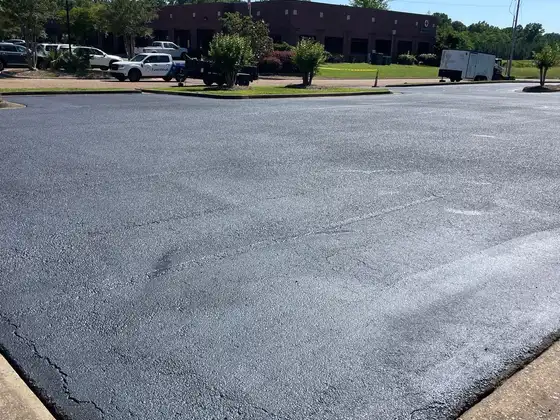
A gray, dry-looking surface covered in fine cracks is a different problem. That is weathered asphalt, and patching won't help it. It usually calls for sealcoating or a new layer over the top.
Repair, resurface, or replace: how we decide
The deciding question is how much of the base under the asphalt is still solid.
Repair fits when the damage sits in defined spots and the rest of the driveway is sound. We fix those areas and leave the good asphalt alone.
Resurfacing fits when the base is solid but the whole surface is worn, rough, or covered in fine cracks. A new layer of asphalt goes over the old one. See asphalt resurfacing for how that works and when it won't hold.
Replacement fits when cracking runs across most of the driveway, the base is soft in many places, or the driveway was built without drainage. Patching a driveway like that means paying for repairs that keep failing. At that point we tear it out and build it the same way we build a new asphalt driveway.
How we repair an asphalt driveway
Narrow cracks get cleaned out and filled so water can't reach the base. That is crack filling, and done early, it costs far less than the repairs it heads off.
Potholes, alligator cracking, and sunken spots need a full-depth patch. We saw-cut around the damage to make clean, square edges, dig out the failed asphalt and the soft base under it, and rebuild with compacted crushed limestone. Hot asphalt goes in on top and gets rolled flush with the driveway around it.
Crumbling edges get the same treatment along the edge line, with soil packed back against the new edge so it has support.
If water caused the damage, we deal with where the water goes. A patch in a spot that stays wet will fail again.
What full driveway replacement involves
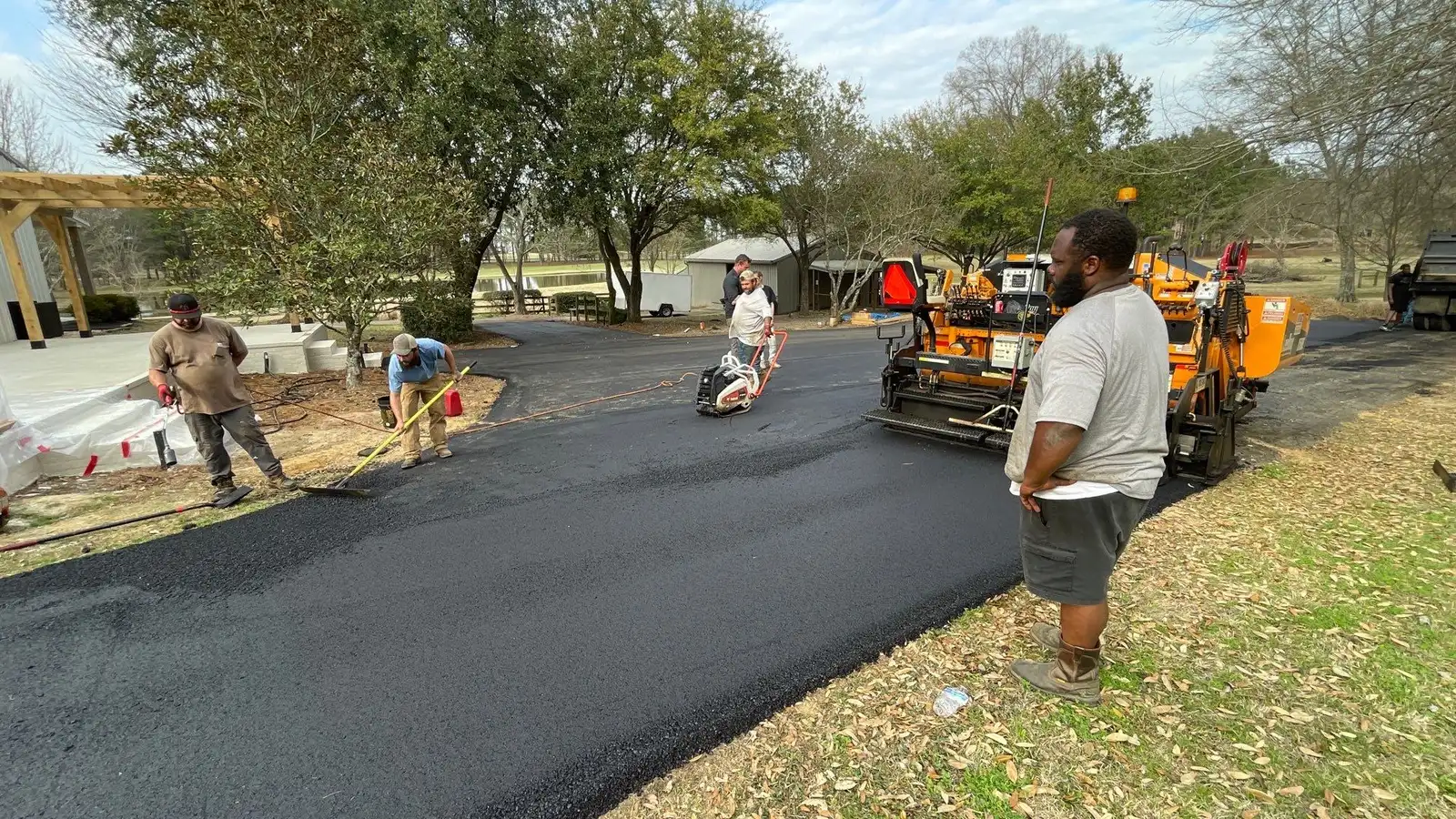
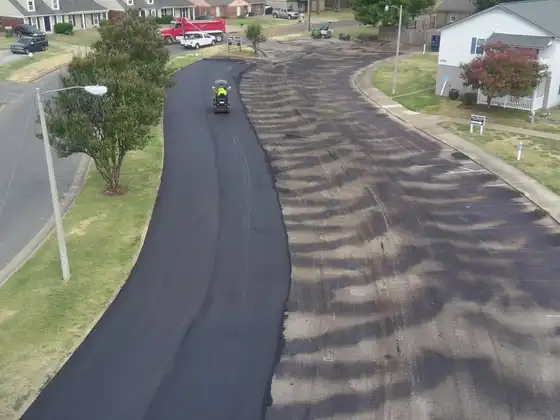
When a driveway is past repair, we take up the old asphalt and haul it off, then regrade so water drains away from the house and garage. Soft spots in the ground get dug out and rebuilt. Mississippi clay swells when it's wet and shrinks when it dries, so finding weak ground before paving matters here.
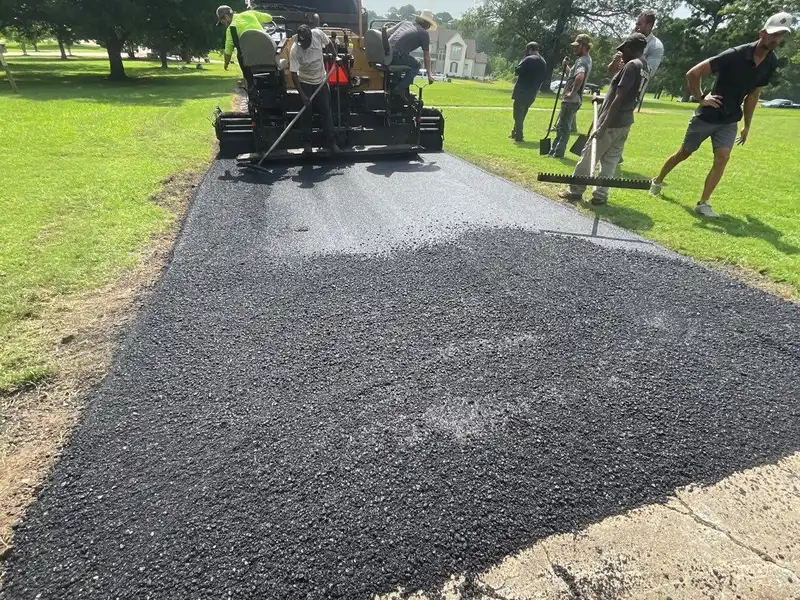
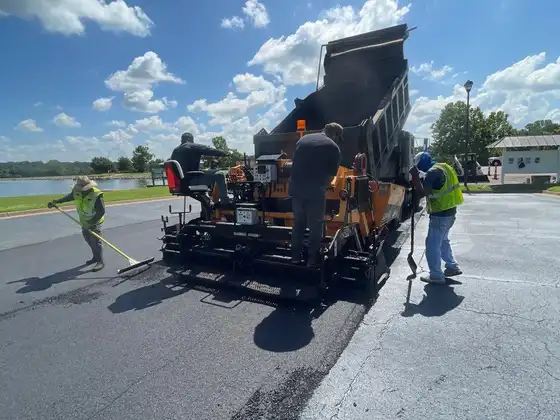
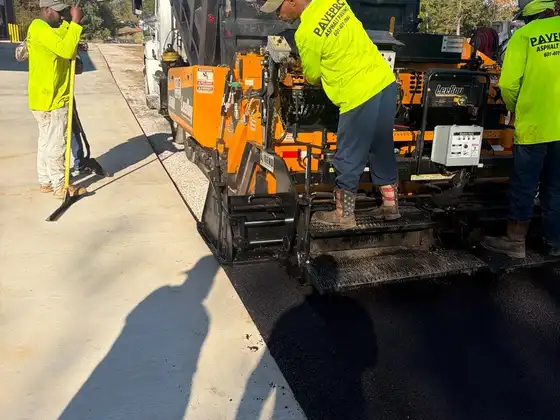
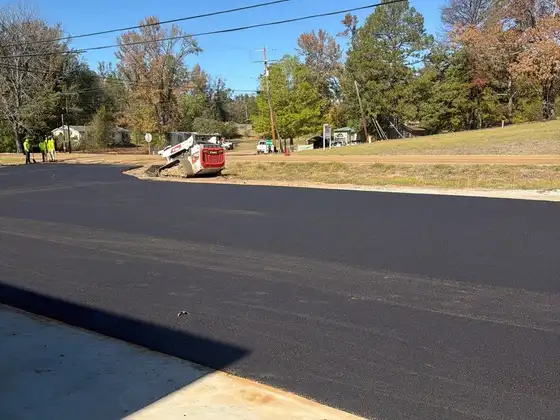
Next comes a compacted crushed limestone base, then hot asphalt at 3 inches laid, 2.5 inches compacted. We roll it tight and finish clean transitions at the garage slab, sidewalks, and street.
Replacement is also the time to fix what never worked. If the old driveway was too narrow, held water, or had no room to turn around, we can change that in the new layout.
What affects the cost of driveway repair
We don't price repairs over the phone, because the cost depends on what is under the asphalt. These are the things that move the number:
- How many areas need repair and how big they are
- How deep the base failure goes
- Whether drainage has to be corrected
- Repair versus full tear-out, including hauling off the old asphalt
- Tie-ins at the garage, sidewalk, and street
- How easily trucks and equipment can reach the work
Someone comes out to look at the driveway, and then we send a free, written, itemized quote with no hidden fees and no obligation. You can request a quote online or call us.
Caring for a repaired driveway
New asphalt, whether it is a patch or a whole driveway, stays softer than old asphalt while it cures, and full cure takes 6 to 12 months. During that time, avoid turning the steering wheel while the car is parked, and set kickstands, trailer jacks, and ramps on a board.
Once it has cured, sealcoat the driveway, then reseal every 1 to 2 years. Fill new cracks while they are small, and keep downspouts and sprinkler water off the edges. With that kind of maintenance, an asphalt driveway can last 20 to 30 years.